
What Is A Customer Journey
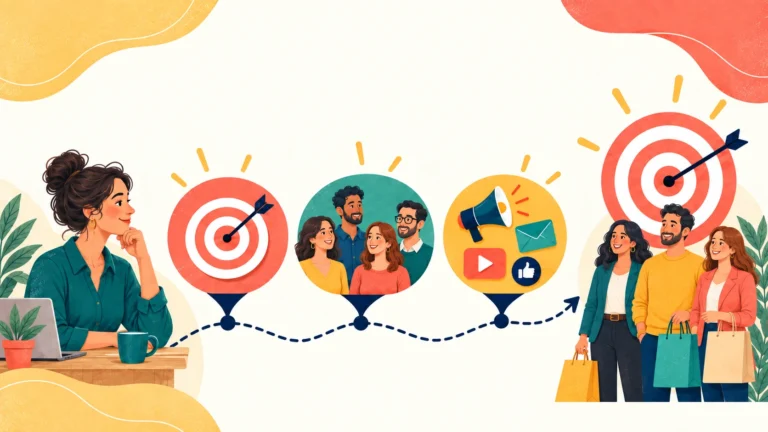
A customer journey is the complete path a person follows from first discovering a business to buying and continuing the relationship. It includes every contact that person has with the business along the way.
This journey may begin with a Google search, a social media post, a recommendation or an advertisement. It can continue through a website visit, a product comparison, a purchase and later customer support.
Understanding this path helps you create a better experience for your customers.
What a Customer Journey Means
Most people do not discover a business and immediately buy something. They normally move through several stages first.
A person may notice a problem or need. They search for information and discover different businesses that could help. They compare their choices, make a decision and perhaps become a regular customer.
The customer journey includes all these stages.
Each contact between the person and your business is called a touchpoint. A touchpoint can be almost any interaction, including:
- Seeing one of your Pinterest Pins
- Reading a blog article
- Watching a video
- Visiting a product page
- Receiving an email
- Asking a question
- Making a purchase
- Contacting customer support
Some touchpoints are controlled by the business. Others are not. For example, a recommendation from a friend can become an important part of the journey.
The Main Customer Journey Stages
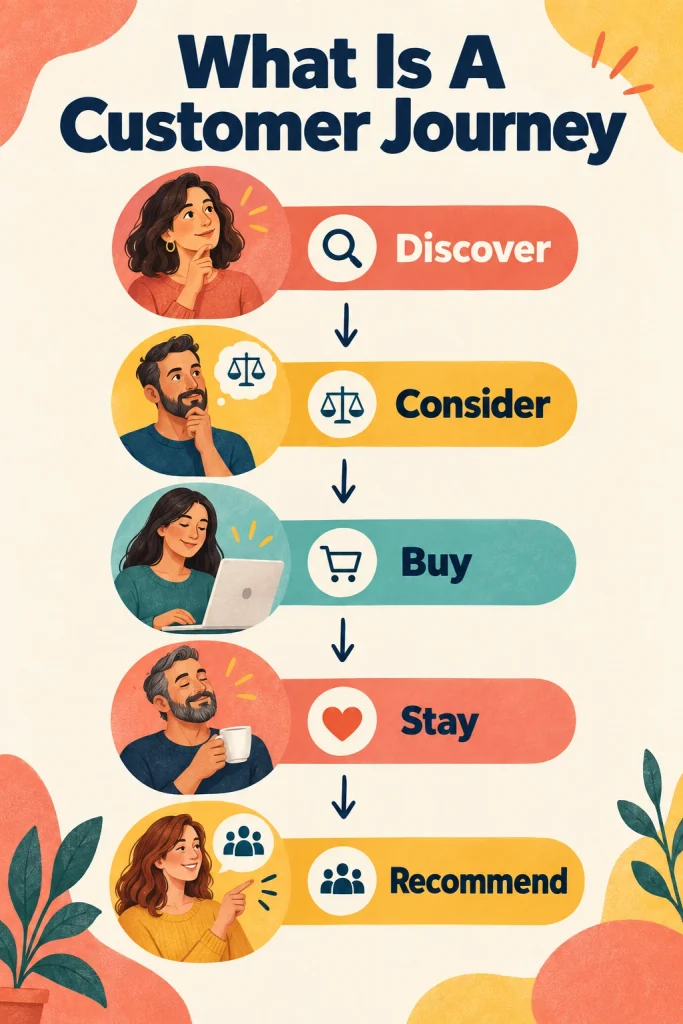
Businesses sometimes use different names for the stages. However, the basic journey can be understood through five simple parts.
| Stage | What the person is doing | What the business can provide |
| Discover | Finding the business for the first time | Clear and useful introductory content |
| Consider | Comparing possible solutions | Helpful information, examples and answers |
| Buy | Choosing a product or service | A simple and trustworthy buying process |
| Stay | Using the purchase and receiving support | Clear instructions and helpful service |
| Recommend | Sharing a good experience with others | An experience worth talking about |
Not every person follows these stages in a perfect order. Someone may visit your website several times before buying. Another person may discover you through a recommendation and make a quick decision.
The table is a useful guide, but real customer journeys are often less direct.
How a Customer Journey Works
The journey usually begins when a person becomes aware of a need.
Imagine someone who wants to start an email newsletter. At first, they may not know which email service to use or how newsletters work.
They search for beginner-friendly information and find one of your articles. This is the discovery stage.
The person then reads more articles, watches a tutorial and compares two email services. They are now considering possible solutions.
After finding clear answers, they choose one service and sign up. This is the buying stage.
The journey does not end there. The person still needs to set up the service and send the first newsletter. Helpful instructions and friendly support can make this part much easier.
If the experience continues to be positive, the customer may stay, buy another product or recommend the business to a friend.
Customer Journey and Customer Experience
The customer journey describes the path a person follows. The customer experience describes how that path feels.
For example, two businesses may offer the same type of product. One has a confusing website, unclear prices and slow support. The other has simple information, an easy buying process and helpful answers.
The basic journey may be similar, but the experience is very different.
This is why businesses should consider both the steps and the feelings connected to them. A customer may feel curious during discovery, uncertain during comparison, confident when buying and either supported or forgotten after the purchase.
A Simple Customer Journey Example
Imagine that Anna wants to buy a beginner’s painting course.
First, she sees a helpful Pinterest Pin about choosing paintbrushes. She visits the connected blog article and discovers a business that teaches painting.
A few days later, she finds another article from the same business. She also watches a short lesson and reads information about the course.
Anna compares the course with two other choices. She wants to know if it is suitable for beginners, what materials she needs and how much time each lesson takes.
The business answers these questions clearly. Anna feels that she understands what she will receive, so she buys the course.
After buying, she receives a simple welcome email and clear instructions for starting the first lesson. When she asks a question, she receives a friendly answer.
Anna completes the course and recommends it to a friend.
Her customer journey includes several different touchpoints: the Pin, two articles, a video, the sales page, the payment process, the welcome email and customer support.
Why the Customer Journey Matters
Looking at your business from the customer’s point of view can reveal problems that are easy to miss.
Perhaps people find your content but do not understand what you offer. Maybe the product page is clear, but the buying process feels difficult. You might also discover that customers receive very little help after buying.
A customer journey can help you:
- Understand what customers need at each stage
- Find confusing or difficult touchpoints
- Create more useful content
- Make the buying process clearer
- Improve support after the purchase
- Build trust over time
You do not need a large company or complicated software to study the journey. A small business can begin with a simple page of notes.
Common Beginner Mistakes
Thinking only about the purchase
The purchase is important, but it is only one part of the journey. Discovery, comparison and support also shape the customer’s experience.
Looking only from the business side
A business may think its website is easy to use because the owner already understands it. A new visitor may see it very differently.
Try to follow the journey as if you know nothing about the business.
Creating too many stages
A detailed map can become difficult to use. Begin with four or five main stages. Add more detail only when it helps you make a practical improvement.
Forgetting existing customers
Good support can turn a first purchase into a longer relationship. Customers who feel forgotten after buying may not return, even when the product itself is good.
Assuming every customer follows the same path
One person may discover your business through Google. Another may come from YouTube, Pinterest or a personal recommendation.
Look for common patterns without expecting every journey to be identical.
A Simple Customer Journey Worksheet
Choose one typical customer and answer these five questions:
- Discover: How might this person first find my business?
- Consider: What information will they need before deciding?
- Buy: What could make the buying process easier or harder?
- Stay: What help will they need after buying?
- Recommend: What would make the experience worth sharing?
Next, choose one stage that currently feels unclear or difficult. Make one small improvement there.
For example, you could improve a product description, answer a common question, simplify a form or create a short welcome guide.
Free Customer Journey Worksheet
Would you like to map your own customer journey?
Download this free four-page worksheet and work through the five stages: Discover, Consider, Buy, Stay and Recommend.
The worksheet helps you:
- Describe one typical customer and offer
- Map the important customer touchpoints
- Understand the customer’s questions and needs
- Find unclear or difficult parts of the journey
- Choose one practical improvement to make
Final Thoughts
A customer journey shows how a person discovers, considers, buys from and continues with a business. It includes every important touchpoint before, during and after the purchase.
You do not need to map everything at once. Begin with one typical customer, identify the main stages and look for one part of the experience you can make clearer.
Marketing Made Simple.