

What Is A Marketing Channel?
A marketing channel is a route a business uses to communicate with customers, reach them and help them take the next step.
Without clear channels, a business may have a useful offer but no reliable way to place it in front of the right people. It may post content in many places without understanding which activities are actually helping.
What a Marketing Channel Means
A marketing channel connects a business with an audience.
The channel carries information from the business to potential or existing customers. That information might introduce a product, explain a service, answer a question or encourage someone to take action.
A website is a marketing channel. Email, social media, search engines, printed materials, physical shops and face-to-face events can also be marketing channels.
The channel is not the complete marketing strategy. A strategy provides the overall direction. A channel is one of the routes used to follow that direction.
For example, a business might have a strategy of helping local families find affordable healthy meals. Its channels could include a website, a weekly email and a stall at a local market.
How a Marketing Channel Works
A basic marketing channel connects four parts:
- The business
- The message or offer
- The audience
- The action the business wants people to take
The business first decides whom it wants to reach. It then creates a suitable message and selects a channel that the audience already uses.
The message moves through the channel to the audience. People may then visit a website, ask a question, join an email list, visit a shop or make a purchase.
A channel can also carry information back to the business. Questions, replies, reviews and customer behaviour can reveal what people need and how they respond.
This means a marketing channel is not always a one-way road. It can support a continuing relationship between the business and its customers.
Common Marketing Channel Examples
Different channels support different situations.
| Marketing channel | Often useful for | Simple example |
|---|---|---|
| Website | Information and enquiries | A visitor reads about a service and completes a contact form |
| Search engine | Reaching people looking for an answer | A customer searches for a local repair service |
| Continuing a relationship | A shop sends useful news to existing subscribers | |
| Social media | Discovery and conversation | A bakery shares pictures of its weekly products |
| Events or personal contact | Building direct trust | A consultant meets potential customers at a local event |
These are not automatically good or bad channels. Their value depends on the business, audience and purpose.
The most fashionable channel is not always the best choice. A quiet channel that reaches the right people can be more useful than a popular channel that reaches thousands of people who have little interest in the offer.
A Simple Example
Imagine a small local bakery.
The bakery wants more people to discover its weekend bread collection. It could use a social media account to show the bread to people living nearby.
However, social media may not be the best channel for every purpose. The bakery could use email to remind regular customers when pre-orders open. Its website could explain the products, prices and collection times.
Each channel has a different job:
- Social media helps new people discover the bakery.
- Email communicates with people who already know it.
- The website provides complete information and accepts orders.
The bakery does not need to use every available channel. It needs a small group of channels that work together and can be managed consistently.
Why Marketing Channels Matter
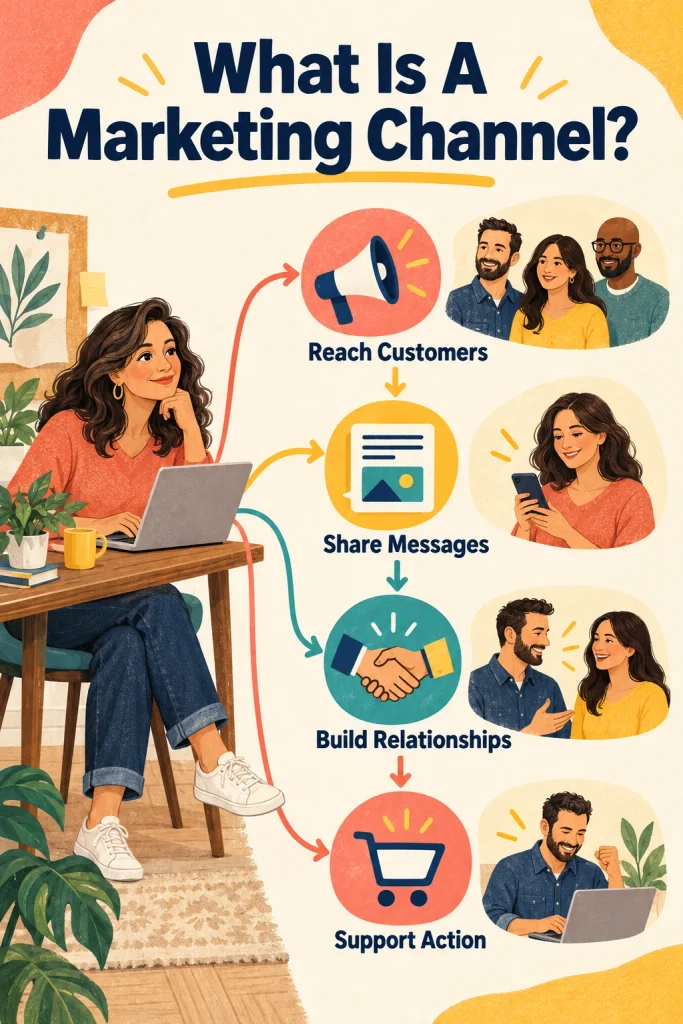
A useful channel helps a business appear where its customers already spend time or search for information.
This can make marketing more focused. Instead of sharing the same message everywhere, the business can choose suitable places and adapt the message to each situation.
Marketing channels can help a business:
- Reach potential customers
- Explain an offer
- Answer questions
- Build familiarity and trust
- Support enquiries or purchases
- Maintain customer relationships
- Learn from customer responses
The channel itself does not create good marketing. The message must still be clear, relevant and helpful.
A business can use an excellent channel badly by publishing confusing messages. It can also achieve useful results through a simple channel when the message closely matches the audience’s needs.
How to Think About Channel Choice
A beginner does not need to master every marketing channel at once.
Start by asking:
- Who are we trying to reach?
- Where do these people already look for information?
- What do they need to understand?
- What action should they take next?
- Can we manage this channel consistently?
- How will we know whether it is helping?
Available time and skills matter. A channel that requires daily work may be a poor choice for a small business that can only create content once a week.
It is usually better to use one or two suitable channels well than to maintain six neglected accounts.
Common Beginner Mistakes
Choosing a channel only because it is popular
A popular platform is not necessarily where the right customers are paying attention.
Starting too many channels
Every additional channel requires content, maintenance and review. Starting with fewer channels makes it easier to learn what works.
Using the same message everywhere
People use different channels for different reasons. A short social media post and a detailed website guide should not perform exactly the same job.
Ignoring the next step
Reaching people is not enough. The audience should understand what to do next, such as reading a guide, asking a question or visiting a product page.
Failing to review the results
A business should periodically examine whether the channel is reaching suitable people and supporting the intended action.
A Simple First Step
Choose one customer group, one goal and one possible channel.
Write down:
- The people you want to reach
- The message they need
- The channel they already use
- The next action you want them to take
- One simple way to measure the response
Test the channel with a small realistic activity. For example, publish one helpful article each week for a month or send one useful email to existing subscribers.
The purpose of the first test is not to produce perfect results. It is to learn whether the channel fits the business and audience.
Free Marketing Channel Choice Worksheet
Use this free two-page worksheet to evaluate one marketing channel at a time. It helps you define the channel’s purpose, check whether it fits your audience and resources, plan a small test and review what you learned.
Final Thoughts
A marketing channel is the route connecting a business, its message and its customers. Websites, email, search engines, social media and personal contact are all possible channels.
The important choice is not how many channels the business can use. It is which channels can reach the right people, carry a clear message and support a useful next step.
Marketing Made Simple.