

What Is Brand Awareness?
Brand awareness is how easily people recognize, remember and understand a brand. It means that the brand feels familiar and comes to mind when people think about a particular need, product or service.
A beginner may have a good offer but still struggle to attract customers because very few people know the business exists. Brand awareness helps solve this first problem. Before someone can consider buying from a brand, they normally need to notice and remember it.
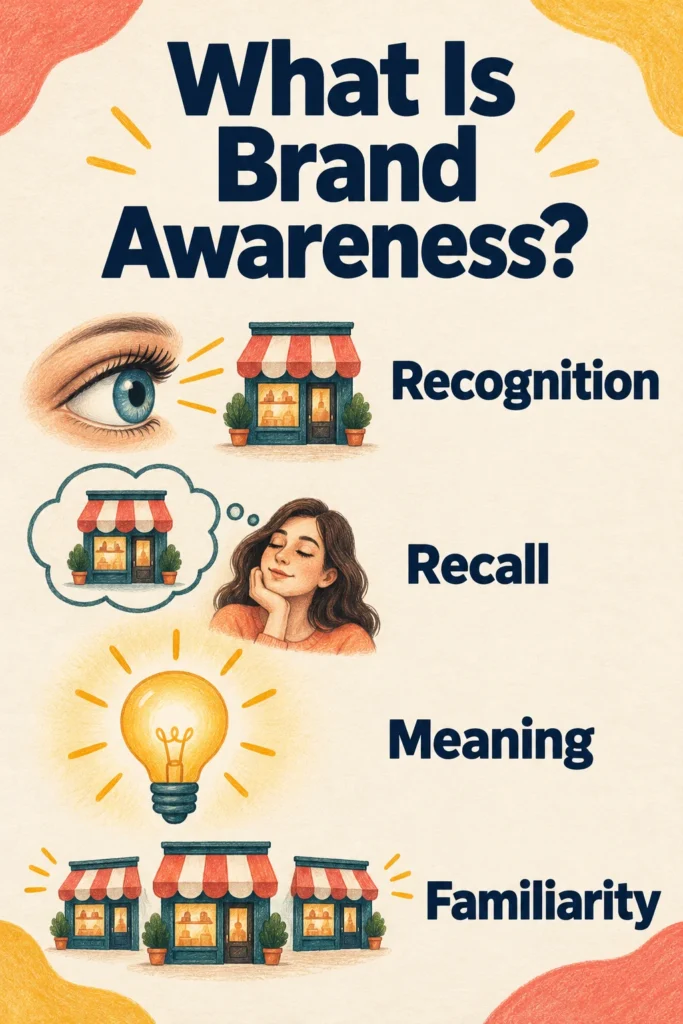
Watch the simple explanation: This short visual guide explains how recognition, recall, meaning and familiarity work together to build brand awareness.
What Brand Awareness Means
Brand awareness is not only knowing a company name. It includes the ideas and feelings that people connect with the brand.
For example, someone may recognize a local bakery from its name, warm yellow sign and familiar packaging. Later, when that person needs a birthday cake, the bakery may come to mind. The customer also remembers that the bakery offers simple handmade cakes.
This shows three useful parts of awareness:
- Recognition: People know the brand when they see it.
- Recall: People can remember the brand without seeing it first.
- Meaning: People understand what the brand offers or stands for.
Familiarity grows when these ideas appear consistently over time. The goal is not to make every person know the brand. The goal is to help the right people recognize and remember it.
How Brand Awareness Works
Brand awareness usually develops through repeated, consistent experiences.
First, a person sees the brand somewhere. This may happen through a website, a Pinterest Pin, a video, a shop sign, a recommendation or a product package.
One meeting is often not enough. The person may notice the brand but forget it later. When the same name, colours, tone and message appear again, the brand becomes easier to recognize.
Over time, recognition can develop into recall. The person no longer needs to see the brand first. A need appears, and the brand comes to mind.
Clear meaning also matters. A person may remember a name without knowing what the business does. Strong awareness connects the name with one useful idea.
| Part | What it means | Helpful question |
|---|---|---|
| Recognition | People know the brand when they see it | Would the same person recognize us again? |
| Recall | The brand comes to mind later | Would they remember us when the need appears? |
| Meaning | People understand the main promise | Do they know what we help with? |
| Familiarity | Repeated contact feels consistent | Does the experience feel related each time? |
Clear thinking is more useful than trying to look clever. A small business does not need many slogans, colours or messages. It needs a few clear elements that people can meet repeatedly.
A Simple Example
Imagine a small online shop that sells easy-care plants for beginners.
The owner uses the same name, teal-and-coral colour palette and calm illustration style on the website, Pinterest Pins and packaging. The shop repeats one simple message: plants that are easier for beginners to care for.
At first, people may only notice one Pin. Later, they see another Pin with the same style. They visit the website and find the same calm message. A few weeks later, someone wants a simple houseplant and remembers the shop.
The awareness did not come from one dramatic campaign. It grew because the business repeated a clear idea in a recognizable way.
Why Brand Awareness Matters
Brand awareness helps people include a business in their choices.
If people do not know that a brand exists, they cannot visit its website, compare its offer or recommend it to someone else. Awareness is therefore an early step in the customer journey.
Familiarity can also reduce uncertainty. A known brand may feel easier to consider than a completely unknown option. This does not mean awareness automatically creates trust or sales. The offer and customer experience still need to be useful.
Brand awareness can support:
- More direct visits and branded searches
- Better recognition across marketing channels
- More word-of-mouth recommendations
- Easier understanding of what the business offers
- A stronger base for future campaigns
Awareness is valuable, but it should connect with the right audience. Being remembered by people who will never need the offer is less useful than being familiar to a smaller relevant group.
Common Beginner Mistakes
Changing the Look Too Often
Constantly changing colours, fonts and visual styles makes recognition harder. Consistency does not mean every post must look identical, but the main visual family should feel familiar.
Using Too Many Messages
If one post says the brand is cheap, another says it is premium and a third says it serves everyone, people may not know what to remember. Start with one clear, useful promise.
Focusing Only on Logos
A logo can support recognition, but awareness also includes the brand name, message, tone, examples and customer experience.
Expecting Immediate Results
Awareness normally develops through repeated contact. Publishing one post or video is not enough to judge the complete idea.
Trying to Reach Everyone
A clear brand for one relevant audience is easier to remember than a vague brand for everyone.
A Simple First Step
Write down three things that should stay consistent:
- The group of people you want to reach
- The useful idea you want them to remember
- Two or three recognition cues, such as a name, colour pair and visual style
Use these elements across a small number of realistic channels for 30 days. Then ask a few people what they recognize, remember and think the brand offers.
The aim is not to become famous. The practical aim is to become familiar and meaningful to the people most likely to need what you offer.
Brand Awareness Starter Worksheet
Use the free worksheet to define your audience, recognition cues and main promise. It also includes a simple recall test and a 30-day plan for checking what people begin to notice and remember.
What is included:
- A clear awareness goal
- A recognition and consistency check
- Simple recall questions
- A practical 30-day test plan
Button text: Download the Brand Awareness Worksheet
Final Thoughts
Brand awareness means being recognized, remembered and understood. It grows when the right people meet the same clear brand idea more than once.
For a beginner, consistency matters more than complexity. Choose a useful promise, repeat a small set of recognizable cues and give people time to become familiar with the brand.
Marketing Made Simple.
Brand Awareness Starter Worksheet
Use the free worksheet to define your audience, recognition cues and main promise. It also includes a simple recall test and a 30-day plan for checking what people begin to notice and remember.